
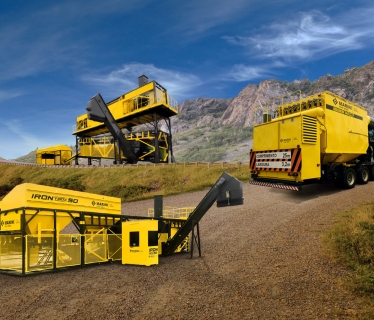
How do you make the right choice?
When the time comes for an entrepreneur to decide on the purchase of an asphalt plant, suppliers often play a key role in helping define the ideal layout and configuration. One of the most important decisions to be made right from the start is choosing between two distinct production systems:
- Continuous or batch production?
- What are the benefits that each method offers?
The truth is: There is no ideal solution.
Each project site and each operational requirement demands a specific approach. That’s why the right choice depends on a thorough analysis of all surrounding factors, as well as the type of production to be carried out. MARINI Latin America, along with its network of partners, is committed to supporting customers throughout this process—guiding them toward the best decision for their business goals.
BATCH PLANTS
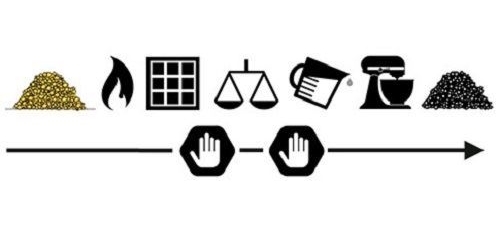
This is the most common type of asphalt plant worldwide, offering the highest level of production flexibility and final product quality. Batch times depend on the type of mix being produced: every 40–50 seconds, a complete batch is delivered after all individual components have been precisely weighed and measured.
This type of plant is essential for producers who serve multiple clients simultaneously, as mix specifications can be easily adjusted while maintaining a consistently high standard of quality.
CONTINUOUS PLANTS
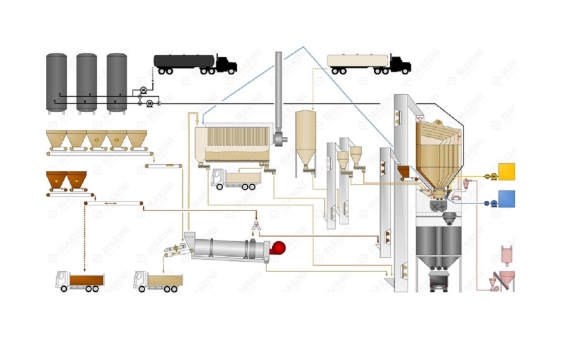
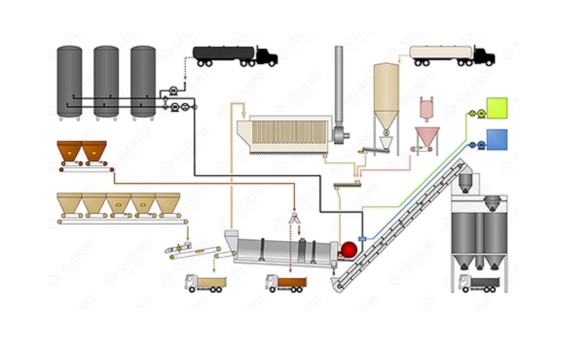
In continuous plants, there is no interruption in the production cycle, as the process is not divided into batches. The material is mixed inside an extended dryer drum, which simultaneously dries and mixes the components.
Since there is no mixing tower or bucket elevators, the system is significantly simplified, leading to reduced maintenance costs. However, the absence of a screening unit makes it essential to have precise control at the very start of the production cycle—before the aggregates are fed into the dryer and before they are discharged as asphalt.
DOSAGE
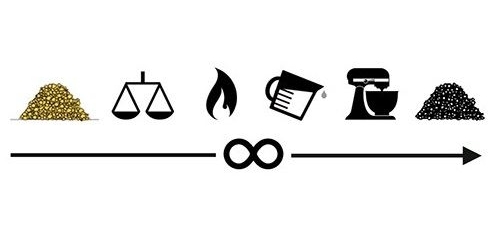
In both types of plants, the production cycle begins with the cold feeders, where aggregates are generally measured by volume. If necessary, the sand extractor can be equipped with a belt scale for more precise measurement.
However, the total weight control of the aggregates occurs at different stages in each plant type. In continuous plants, there is a feeder belt before the moist aggregates are introduced into the dryer drum. At this point, the moisture content is manually adjusted to allow for the subtraction of water weight. For this reason, it's extremely important that the moisture content of the aggregates—especially sand—remains consistent and is monitored through frequent laboratory testing.
In batch plants, on the other hand, aggregate weighing occurs after the drying process, before they are fed into the mixer. As a result, the weighing process in the weigh hopper is not affected by moisture or by variable factors such as changing weather conditions.
Additionally, batch plants feature a screening unit, which allows for more precise selection of materials prior to mixing—leading to greater consistency in the final product quality. This helps prevent inaccuracies, such as oversized aggregates mistakenly ending up in the sand hopper, inconsistencies in aggregate feeding, or preset errors in the cold feeder settings.
For this reason, in many countries where quarries do not enforce adequate and rigorous quality control procedures required for asphalt production, batch plants are a mandatory requirement in technical specifications.
The final decision
Naturally, this is up to each customer, but in general terms, a solution can be found as follows:
Gravimetric plants – When flexibility, precise control, and special formulas are required.
Continuous plants – When low operational costs and continuous production are the main requirements.
Regardless of your decision, MARINI Latin America has the right equipment in its portfolio to meet the needs of your project, whatever they may be.